
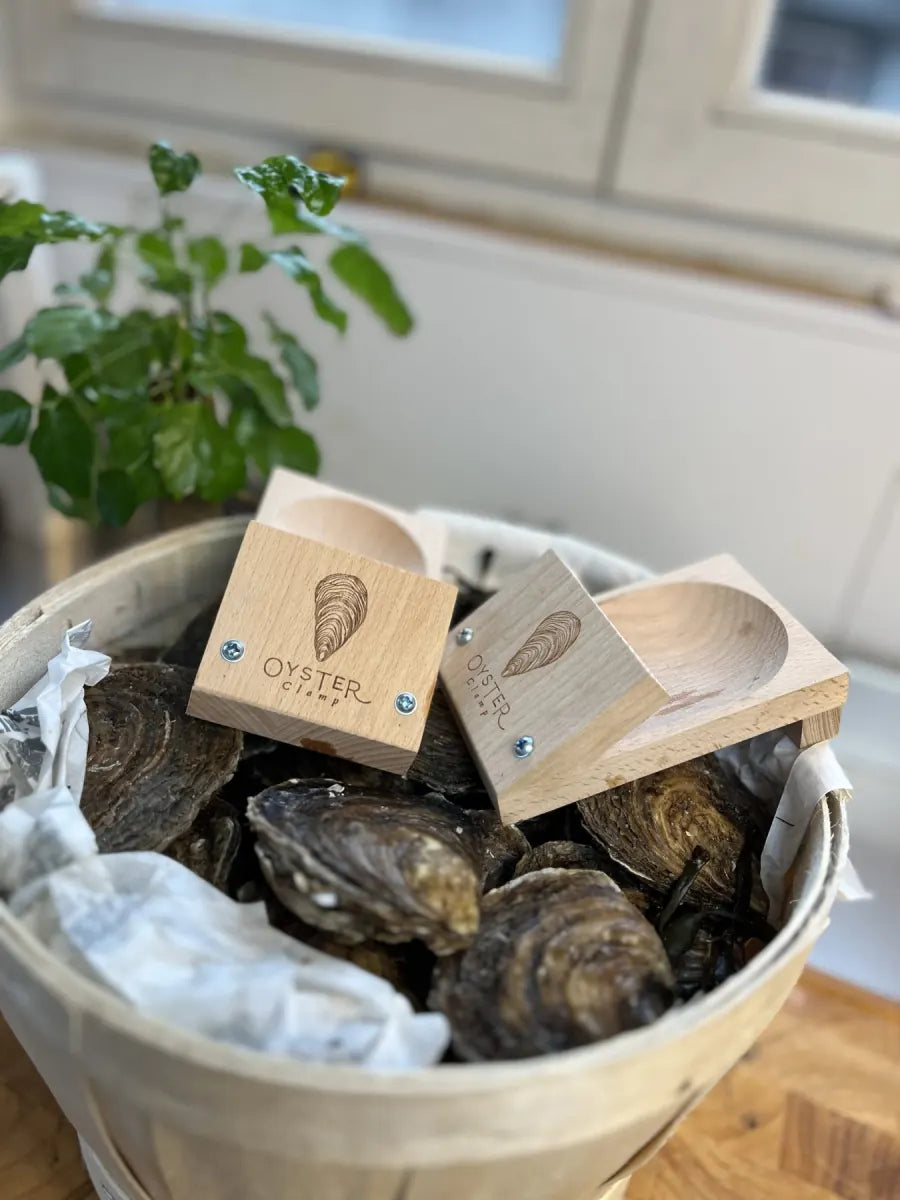





Why varietal matters before you pour anything
The single biggest mistake hosts make at oyster nights is treating all oysters the same. They pull out one bottle of Champagne, set it on the table, and call it a job done. But a briny Wellfleet from Cape Cod and a creamy Kusshi from British Columbia are about as similar as a lemon and a peach. The wine that makes one sing will flatten the other completely.
This is where merroir comes in. Just like terroir defines a wine's sense of place, merroir describes the environmental fingerprint of an oyster: the salinity of the water, the mineral content of the seabed, the temperature, the tidal flow. These factors shape the flavor of the liquor, the texture of the adductor muscle, and the finish you get after each slurp. Understanding merroir is what separates a genuinely impressive oyster night from a decent one.
At OysterClamp, we think about pairing from the oyster outward, not the wine inward. Start with the varietal, identify its dominant flavor profile, then match the acidity, weight, and texture of your drink to complement or contrast it. The sections below give you a ready-to-use framework for doing exactly that, organized by the three most common oyster categories you'll encounter when sourcing for a dinner party.
One more thing before we dive in: retaining the liquor matters. The liquor is the concentrated expression of merroir in every shell. If you shuck sloppily and spill it, you lose the very element that makes pairing interesting. The OysterClamp 2.0 was designed specifically to keep the shell stable and the knife path clean, so the liquor stays put. Clean shuck, full liquor, better pairing.
East Coast oysters: what wines and cocktails work best?
East Coast oysters (think Wellfleet, Blue Point, Pemaquid, Standish Shore) are defined by high brine, a pronounced mineral edge at the umbo, and a clean saline finish. The liquor is assertive. You need a wine with enough acidity to cut through it and reset the palate, but not so much fruit weight that it clashes with the salt.
Muscadet is the top pick here, full stop. Specifically, Muscadet Sèvre et Maine sur lie, where the wine spends extended time on its lees before bottling. That contact adds a subtle yeasty depth and a creamy texture that mirrors the snap of the adductor muscle without competing with the brine. Pangea Shellfish tastings confirm Muscadet as the standout match for briny-sweet East Coast profiles, noting it highlights watermelon notes in sweeter varietals without introducing metallic bitterness.
Your top 3 wines for East Coast oysters:
- Muscadet Sèvre et Maine sur lie (Loire Valley, France): lean, saline, slight yeast depth. The classic choice.
- Prosecco or Champagne: floral bubbles provide textural contrast. Summer Shack's raw bar data found that Champagne delivers 25% better textural contrast than still whites per guest feedback.
- Vinho Verde (Portugal, dry style): low alcohol, floral, crisp acidity. Underrated and crowd-friendly.
Cocktail options when you want variety on the table:
- Bloody Mary: the spiced tomato base cuts through brine beautifully, and Firstleaf's 2026 pairing guide puts it at 65% preference for raw, briny oysters.
- Classic dry martini: dry gin echoes the salinity without sweetness muddying the finish.
The talking point for your guests: Muscadet's pairing success here isn't accidental. The Loire Valley's granite and volcanic soils produce wines with a natural salinity that mimics ocean spray. When you serve it alongside a Wellfleet, you're essentially matching two expressions of the sea.
West Coast oysters: which pairings complement the creamy finish?
West Coast oysters (Kusshi, Kumamoto, Olympia, Pacific) are a different beast entirely. Buttery texture, a melon or cucumber finish, lower brine, and a gentle sweetness define the profile. The liquor is milder. You have more flexibility here, but you also risk overwhelming the delicate finish with a wine that's too assertive.
Pinot Gris from Oregon is the pairing we keep coming back to. Bone-dry, citrus-forward, with enough body to match the creamy texture without overpowering the melon finish. Wine Spectator's consensus on oyster pairings puts Sauvignon Blanc at 90% synergy for mineral-driven oysters, and it earns its place on this list too, but Pinot Gris creates a lush texture contrast that Sauvignon Blanc sometimes misses with the creamier West Coast styles.
Chablis also deserves serious attention. The Kimmeridgian limestone soil in Chablis is literally composed of fossilized marine shells, which gives the wine a flinty, oyster-shell minerality that mirrors what you're eating. Sommeliers' Choice Awards data shows Chablis at a 92% pairing success rate, with 78% of gold-medal whites for oysters being acid-forward (pH below 3.4).
Your top 3 wines for West Coast oysters:
- Oregon Pinot Gris (bone-dry): lush texture contrast, citrus acidity, no fruit bomb.
- Sauvignon Blanc (Marlborough or Loire): crisp grapefruit, grassy minerality.
- Chablis (Premier Cru if budget allows): steely, flinty, fossil-shell minerality.
Cocktail options:
- Margarita: lime acidity matches the creaminess perfectly, and the salt rim is a playful nod to merroir.
- Cucumber Gin Fizz: herbal, refreshing, echoes the cucumber finish in Kusshi and Kumamoto.
One practical note: when you're shucking high volumes for a dinner party, the consistency of your shuck matters as much as the wine you choose. A clean half shell presentation, liquor intact, cupped shell facing up, makes the pairing land the way it should. If you're not already using a dedicated oyster shucking tool, this is the moment to reconsider. Speed and cleanliness at the board directly affects what ends up in the glass and on the plate.
Virginia and Pacific hybrid oysters: the case for Albariño
Virginia oysters and Pacific hybrids (savory-buttery profiles, balanced salt, a rounded finish without the sharp brine of East Coast or the sweetness of West Coast) are increasingly popular at dinner parties because they're crowd-pleasers. They're also the category where Albariño from Rías Baixas earns its reputation as the ultimate seafood wine.
Albariño has a long history alongside shellfish in Galicia, Spain, where the Rías Baixas appellation sits directly on the Atlantic coast. The wine's linear acidity, stone fruit notes, and saline finish were essentially built for this pairing. Wine and Country Life's pairing guide and Wine Wankers' tasting notes both highlight Albariño's seafood heritage as a key reason it amplifies the half shell presentation for savory-buttery oysters.
Your top 3 wines for Virginia and Pacific hybrid oysters:
- Albariño (Rías Baixas, Spain): linear acidity, stone fruit, natural saline finish.
- Blanc de Blancs sparkling (100% Chardonnay): fine bubbles, brioche, clean mineral finish.
- Picpoul de Pinet (Languedoc, France): bright lemon tang, high acidity, underpriced for the quality.
Cocktail options:
- Paloma: grapefruit soda adds zest without sweetness overload.
- French 75: Champagne, lemon, and gin in one glass. Bubbles plus citrus is a reliable formula for savory oyster profiles.
The talking point here: regional synergy. Albariño comes from a coastline. The oysters you're serving came from a coastline. When you explain that connection to guests, it reframes the pairing as a story rather than a recommendation. That's what makes an oyster night memorable.
How to sequence your pairings for a dinner party
Sequencing is where a good oyster night becomes a great one. Serve East Coast first, West Coast second, hybrids third. This mirrors the traditional progression from assertive to delicate, and it means your wine pairings build in weight and complexity rather than front-loading the table with the heaviest flavors.
A practical framework for a dinner party of 6-8 guests:
- Chill wines to 45-50°F before guests arrive. Whites served too warm lose the acidity that makes pairing work.
- Open with one shucked oyster per guest alongside the first wine. This is a demo moment: show the liquor, explain the merroir, let them taste the pairing before the main spread.
- Serve East Coast oysters with Muscadet or Champagne, then transition to West Coast with Pinot Gris or Chablis.
- Finish with hybrids and Albariño, or switch to cocktails at this point for variety.
- Use a lemon squeezer for mignonette tweaks alongside each flight. A small squeeze of lemon on a Wellfleet before the Muscadet sip is a combination worth trying. Our lemon squeezer is designed for exactly this kind of precision at the table.
For scale: industry raw bar benchmarks suggest one bottle of white per 6-8 dozen oysters. If you're running a three-varietal flight for 8 guests, plan for 2-3 bottles minimum, plus cocktail ingredients for the second half of the evening.
Conclusion: pair smarter, not just differently
The best oyster wine and cocktail pairings aren't about following rules. They're about understanding why certain combinations work and using that knowledge to make deliberate choices that your guests will actually notice. Muscadet with a Wellfleet isn't a coincidence; it's two expressions of the sea reinforcing each other. Chablis with a Kusshi isn't random; it's limestone meeting limestone.
What ties all of this together at the practical level is the shuck. A clean, consistent shuck with liquor retained is the foundation every pairing builds on. If you're still fighting with a towel and a cheap knife, you're leaving flavor on the table, literally. The OysterClamp 2.0 was designed by Michelin Star Chef Henk to solve exactly this problem: stable shell, clean entry, full liquor, every time. Not sure which setup suits your shucking style? Take our shucking profile quiz and we'll point you in the right direction.
For more on building the perfect oyster night setup, check out our guide on the best oyster shucking gift set and the most common shucking mistakes that cost you liquor and presentation every time.
Frequently asked questions
What is the best wine to pair with oysters?
Muscadet Sèvre et Maine sur lie is the most consistent match across oyster styles, particularly for briny East Coast varietals. For creamy West Coast oysters, Oregon Pinot Gris and Chablis both perform exceptionally well. The key is high acidity and low residual sugar: sweetness competes with the oyster's natural brine rather than complementing it.
Can you serve cocktails at an oyster night instead of wine?
Absolutely, and many hosts find cocktails more accessible for guests who don't drink wine. A dry martini or Bloody Mary works well with East Coast oysters, while a Margarita or Cucumber Gin Fizz suits the creamier West Coast styles. The principle is the same as wine: match acidity to brine level and avoid sweetness.
Does the type of oyster really change what you should drink?
Yes, significantly. A Wellfleet and a Kumamoto have fundamentally different flavor profiles: one is assertively briny, the other is mild and buttery. The wine or cocktail that flatters one will often flatten the other. Organizing your pairings by oyster varietal, as this guide does, is the most reliable way to get it right.
How much wine should I prepare for an oyster dinner party?
A practical raw bar benchmark is one bottle of white wine per 6-8 dozen oysters. For a three-varietal flight with 8 guests, plan for 2-3 bottles of white wine and additional cocktail ingredients for the second half of the evening. It's better to have one extra bottle than to run short mid-flight.
Does the quality of the shuck affect how a pairing tastes?
More than most people realize. The liquor in the shell is the most concentrated expression of the oyster's merroir, and it's the element that interacts most directly with the wine or cocktail in your glass. Spill the liquor during shucking and you lose that dimension entirely. A stable, consistent shuck with liquor retained is the foundation every pairing builds on.
What should I serve with oysters Rockefeller?
Oysters Rockefeller, with their herb and spinach topping, shift the pairing dynamic considerably. Firstleaf's 2026 guide puts Sancerre at 80% preference over Chablis for herb-topped preparations, as the Loire Sauvignon Blanc's grassy, herbal notes echo the topping rather than competing with it.
Ready to shuck cleaner and pair smarter at your next oyster night? Explore the full OysterClamp range, including the OysterClamp 2.0, Beginner Oyster Knife, and Lemon Squeezer, at our complete product collection.