





What's actually happening in the Chesapeake Bay right now
The numbers coming out of Maryland's 2025 fall survey are genuinely striking. The state recorded 250 spat (juvenile oysters) per bushel at key monitoring sites, nearly six times the long-term average of 42.2 spat per bushel. That's the highest reproductive success since 1997, and the second-highest spat count in 41 years of modern survey history.
But it's not just the juveniles. Maryland's total oyster population now exceeds 12 billion oysters, including 7.6 billion adults — more than triple the 2.4 billion adults recorded in 2005. That kind of population recovery doesn't happen overnight. It's the result of decades of sanctuary restoration work, and it's now translating into real, tangible improvements in supply.
For those of us who host oyster nights and care about where our half shells actually come from, this is the kind of shift that changes your sourcing options. More oysters, better health metrics, improved water quality, and a wider range of traceable regional varietals entering the market pipeline. That's a meaningful upgrade.
Takeaway: Maryland is producing more oysters than it has in a generation. The supply surge is real, it's documented, and it's creating sourcing opportunities that didn't exist five years ago.
What does this mean for oyster quality and merroir?
Better water quality directly improves what ends up on your half shell. The ecological recovery driving these reproduction numbers also improved water clarity throughout the Chesapeake Bay. Each mature oyster filters water to remove algae, and as population density increases, the cumulative filtration effect lifts water quality across the entire ecosystem. That improvement feeds back into flavor.
For home enthusiasts who think seriously about merroir, this matters. Maryland oysters sourced in 2026 and beyond carry improved mineral profiles compared to pre-restoration years. You're looking at better brininess, more defined umami intensity, and a cleaner finish — the kind of characteristics that reward careful shucking and thoughtful presentation.
There's also a disease story worth knowing. Oyster mortality reached the third lowest since 1985, with Dermo disease at its lowest levels in 36 years. For anyone sourcing oysters for a dinner party, that health metric directly correlates with meat quality. Less disease pressure means better condition in the cupped shell, more intact liquor, and a higher percentage of clean, undamaged adductor muscles when you're shucking.
In our experience, the difference between oysters sourced during a strong ecological year versus a stressed one shows up immediately on the shucking board. The meat holds together better, the liquor is fuller, and the whole experience of opening and presenting them is more rewarding.
Takeaway: The same conditions producing record reproduction are also improving flavor profiles and meat quality. This is a genuine merroir upgrade, not just a supply story.
How to source Maryland oysters by river sanctuary
The restoration work behind these numbers is tied to specific geography. The Chesapeake Bay Watershed Agreement drove the completion of initial restoration projects in five river sanctuaries by 2025, and those sanctuaries now produce oysters with documented, traceable flavor characteristics.
Here's how to approach sanctuary sourcing practically:
- Ask your supplier which river the oysters came from. Choptank River oysters, Patuxent River oysters, and other sanctuary-specific varietals now have enough population consistency to offer repeatable flavor profiles. This is a significant shift from the mixed or variable stock that was common before restoration matured.
- Request traceability documentation. The Maryland Department of Natural Resources tracks harvest data by zone and waterman. Suppliers sourcing from certified sanctuaries should be able to confirm which sanctuary their stock originates from. You can cross-reference this against public harvest reporting data (fisheriesshellfishreport.dnr@maryland.gov or 410-260-8279).
- Contact the Oyster Recovery Partnership. The ORP executed the five-river restoration projects and maintains a network of verified watermen and suppliers. They're a direct line to certified, sustainably farmed oysters with documented provenance.
- Don't overlook non-sanctuary stock. Spillover benefits from sanctuary population increases now extend to harvest areas outside restoration zones. Chesapeake Bay oysters sourced without sanctuary-specific traceability still benefit from the improved ecosystem health driving this recovery.
For home shuckers who rotate through different regional varietals, this is the moment to get specific about Maryland. The supply is there, the quality is up, and the traceability infrastructure now exists to source by river rather than just by state.
Not sure how your sourcing priorities match your shucking setup? Find your shucking profile to figure out which tools and approaches suit the volume and variety you're working with.
Takeaway: Sanctuary-specific sourcing is now practical for home enthusiasts. Ask for river-level provenance, use the ORP supplier network, and start building varietal knowledge around specific Chesapeake geography.
Is this the right time to buy Maryland oysters in bulk?
Yes, and the timing window is specific. The commercial season was extended through April 14, 2026, following a hard freeze in January and February that left ice coverage exceeding 90% on many bay waters. That weather disruption created temporary market softness, which for retail buyers purchasing directly from watermen or specialty suppliers may translate into more competitive pricing during the extended season window.
The extended season closes April 14. After that, normal May through October off-season supply constraints resume. If you're planning spring or early summer oyster nights, sourcing now captures both the extended availability and any pricing advantages before the off-season gap.
Looking further out, the 2025 spat cohort matures into harvestable adults over the next one to three years. That puts peak sustained availability somewhere between spring 2026 and 2028. If you're someone who plans entertaining calendars seriously, this is a multi-year sourcing window, not a one-time event.
One caveat: despite record reproduction, Governor Moore sought a federal disaster declaration for the fishery to aid sustainability through the 2025–2026 season. The weather-related market stress is real. Supply chain disruptions are possible. Securing your inventory during the April window before the off-season is the practical move.
Takeaway: April 2026 is your peak sourcing window. Extended season, potential pricing advantages, and record supply before the May off-season. Plan your bulk order now.
What does a high-volume Maryland haul mean for your shucking setup?
Here's where the supply story connects to your actual kitchen experience. If you're sourcing Maryland oysters in volume — whether that's three dozen for a Tuesday night or eight dozen for a dinner party — your shucking setup matters more than most people admit.
Chesapeake Bay oysters tend to have a pronounced, irregular cupped shell with a hinge point that varies significantly between individual oysters. That variability is part of what makes them interesting, but it's also what slows you down when you're working through volume. If you're fighting the umbo on every third oyster, losing liquor, or chipping the shell into the meat, you're not getting the best out of what you sourced.
In our experience, the biggest bottleneck for home shuckers working Maryland varietals isn't technique — it's stability. Without a reliable way to hold the oyster steady while you work the hinge, inconsistent shell shapes become a genuine problem at volume.
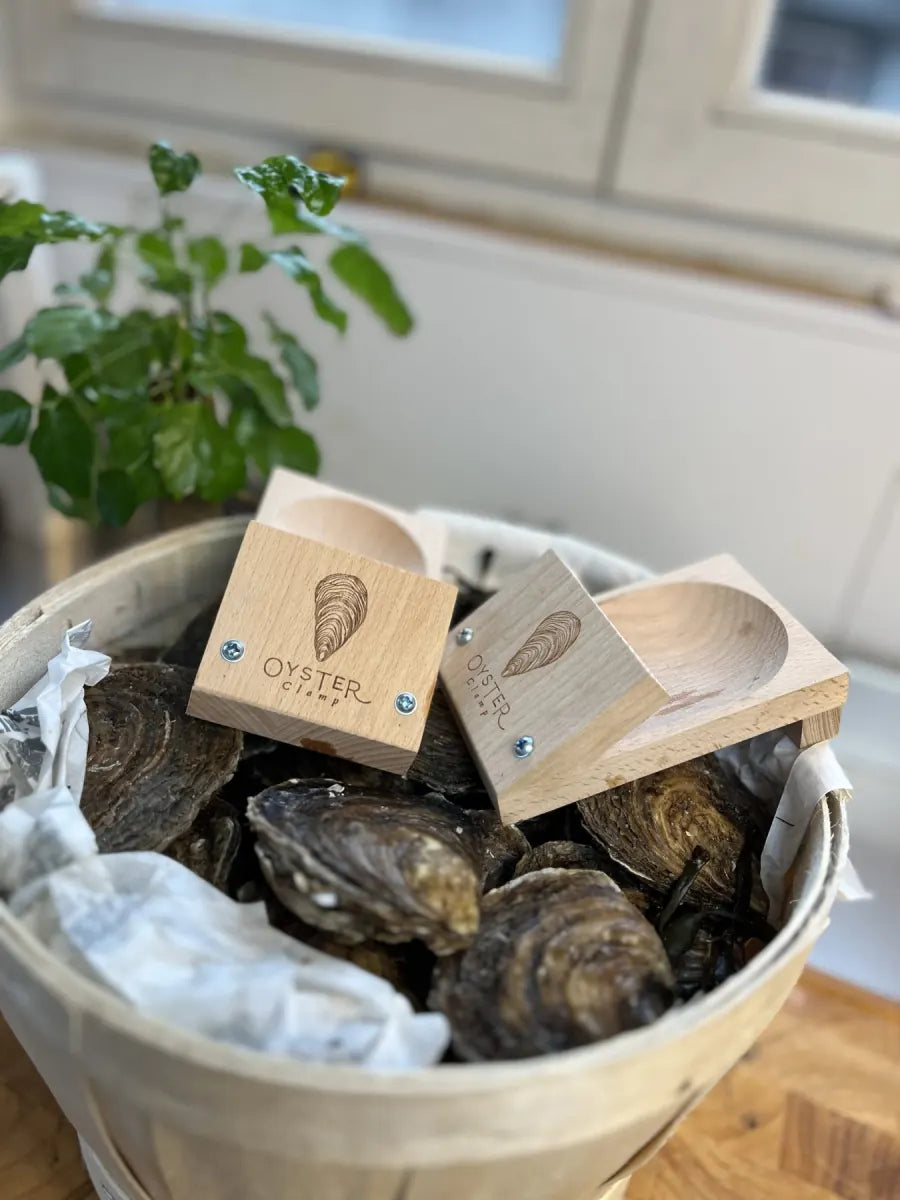
The OysterClamp 2.0 was designed specifically to solve the stability problem. Michelin Star Chef Henk built it to handle the kind of shell variability you find in wild-harvested and sanctuary-sourced oysters — keeping the cupped shell locked in position so you can focus on the adductor muscle and the liquor rather than fighting the shell. When you're working through two or three dozen Maryland oysters for guests, that consistency adds up fast.
Explore the full OysterClamp range if you're building out your setup for the spring sourcing season.
Takeaway: Record supply creates a high-volume shucking opportunity. Your setup needs to match the ambition. Shell stability is the variable that separates a smooth oyster night from a frustrating one.
Is Maryland the best region for sustainably farmed oysters right now?
Right now, yes — at least in terms of documented supply recovery and ecological momentum. The available oyster habitat in Maryland tied a 21-year record, and the combination of sanctuary restoration, disease resistance improvements, and population growth creates conditions that other regions aren't currently matching on the same scale.
That said, "best" depends on what you're optimizing for:
- Briny, mineral-forward profiles: Pacific Northwest oysters (Kumamoto, Olympia) still lead here. Maryland oysters are milder, sweeter, and more complex in umami rather than outright brine.
- Traceability and sustainability certification: Maryland's sanctuary system now offers some of the most documented provenance available in the U.S. market for wild-harvested oysters.
- Volume and price: The current supply surge makes Maryland one of the most accessible markets for bulk sourcing. East Coast farmed varietals from Maine or Prince Edward Island remain strong alternatives, but Maryland's wild-harvest volume is hard to match right now.
- Merroir exploration: If you're building varietal knowledge and want to understand how river geography shapes flavor, Maryland's five sanctuary rivers now offer a structured way to taste your way through Chesapeake terroir.
For home enthusiasts who rotate through regional varietals and host regularly, adding Maryland sanctuary oysters to your rotation in 2026 is a straightforward call. The supply is there, the quality story is strong, and the sourcing infrastructure now exists to do it properly.
Start shucking better Maryland oysters this season
Maryland's 30-year oyster reproduction high is more than a conservation headline. It's a sourcing opportunity — for sustainably farmed and wild-harvested oysters with improved merroir, documented traceability, and the kind of supply consistency that makes building a serious home oyster practice actually feasible.
The window is open now, and it runs through April 14, 2026. After that, the off-season gap begins and the extended availability disappears until fall.
If you're ready to upgrade your setup to match the quality of what you're sourcing, the OysterClamp 2.0 is where we'd start. Designed by a Michelin Star chef for exactly the kind of high-volume, variable-shell shucking that Maryland oysters demand. Your sourcing is getting better — your tools should keep up.