





What separates high-volume shucking from home technique
Speed and consistency are not the same skill. At home, you can take 90 seconds per oyster, adjust your grip, and no one notices. At a 200-person corporate event with guests queuing at your raw bar, that same pace collapses your service within the first 30 minutes.
High-volume shucking is a production discipline. Every motion needs to be standardized, every station needs to be set up identically, and every shucker, whether seasoned or seasonal, needs to execute the same sequence every time. That's the foundation.
Here's what the pros actually prioritize at scale:
- Hinge entry, not force. The goal is precise insertion at the umbo (the pointed tip of the shell), not muscling the knife in. A controlled pivot at the hinge point releases the adductor muscle cleanly.
- The rocking U-motion. Rather than stabbing or twisting aggressively, experienced shuckers use a subtle rocking motion from the hinge toward the bill of the shell. This preserves the liquor and reduces shell breakage significantly.
- Cupped shell down, always. This isn't optional. The cupped shell faces down so the liquor pools correctly on the half shell. Flipping it loses merroir and ruins presentation.
- Consistent knife depth. Going too deep nicks the meat. Too shallow and you haven't cleared the adductor muscle. Both create waste and slow you down.
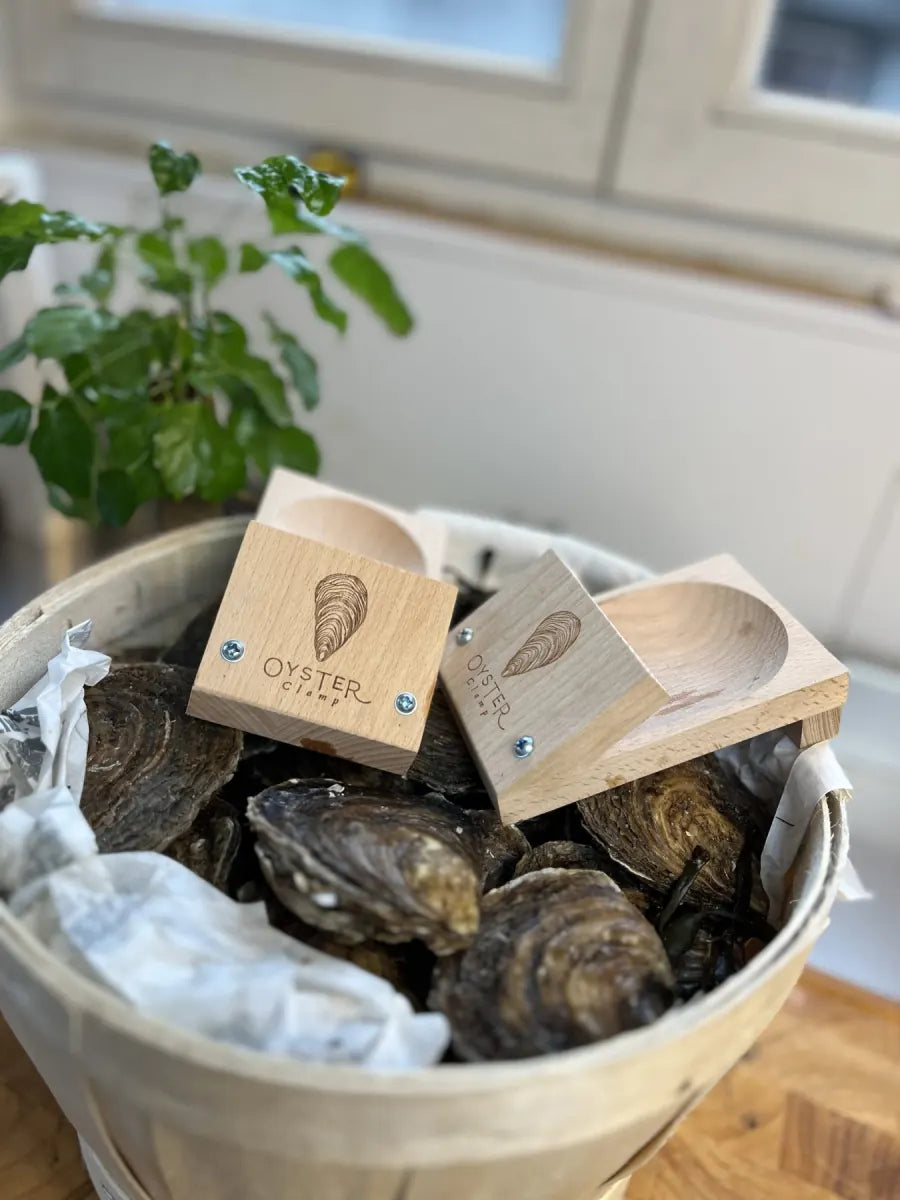
At OysterClamp, we work from the same principles that Michelin Star Chef Henk built into the OysterClamp 2.0: leverage over force, stability over speed. When your tool holds the shell securely, your shucker can focus entirely on technique rather than fighting the oyster.
How fast should your team actually be shucking?
A trained professional shucker can maintain 20 to 30 oysters per minute at peak throughput, with waste rates under 5%, according to Charleston Oyster Cooker's event operations guide. That's the ceiling. For your event planning, don't build your staffing model around that number.
A more realistic benchmark for a competent but non-specialist shucker is 200 to 300 oysters per hour, per station. That gives you a workable formula:
- 100 guests at 8 oysters per guest = 800 oysters
- With a 90-minute service window, you need roughly 3 shuckers working simultaneously
- Add one extra shucker as buffer for rush periods and breaks
LA Times food writer Ari Kolender confirms that freshness is the other half of this equation: oysters harvested within 7 days hold their shell structure better, which directly affects shucking speed. A compromised shell chips more, slows the shucker down, and increases your waste percentage. Source well, and your throughput numbers improve automatically.
For events where you're mixing East and West Coast varieties (say, Rhode Island Bluepoints alongside Washington Kumamotos), brief your team on the shell differences. Kumamotos are smaller and more delicate at the hinge. Bluepoints are meatier but can be trickier around the bill. Standardize your technique per variety before service, not during it.
Pre-shucking 20 to 30 percent of your volume during setup is a practical buffer. It smooths out the first rush and gives your team time to find their rhythm before the crowd hits the station.
How do you train temporary staff to shuck safely before an event?
This is the question every catering manager faces the week before a large event. You've hired four people who have never shucked professionally, you have a briefing window of maybe 60 minutes, and you need them functional by service time.
Here's the drill sequence we recommend, built around the same technique principles that inform the OysterClamp 2.0:
Step 1: Grip and stabilization (10 minutes)
Non-dominant hand holds the oyster in a folded towel or cut-resistant glove, cupped shell down. The towel isn't just safety theatre, it absorbs the micro-movements that cause slips. No bare-handing at volume. Ever.
Step 2: Hinge insertion (10 minutes)
Insert the knife tip at the umbo, apply lateral pressure (not forward force), and feel for the give. This is the most common failure point for untrained staff. They stab. Teach them to pivot. Hog Island Oysters' shucking guide demonstrates this entry angle clearly and is a useful visual reference for pre-event briefings.
Step 3: The rocking U-motion (15 minutes)
Once the hinge opens, guide the knife along the inside of the top shell using a shallow rocking motion toward the bill. This severs the adductor muscle from the top shell cleanly. Then slide under the meat to release the bottom adductor, keeping the knife flat to avoid nicking the oyster.
Step 4: Presentation check (10 minutes)
Half shell lands cupped-side down on the ice bed, meat centered, liquor intact, no shell fragments. This is your quality gate. Set a standard and hold it from the first oyster.
Step 5: Speed practice (15 minutes)
Repetition under a timer. Target under 2 minutes per oyster for new staff at this stage. Speed comes with muscle memory, not instruction.
Using video as a reference during training cuts onboarding time substantially. A standardized technique video played before the drill session means your verbal instruction reinforces what they've already seen, rather than introducing everything cold.
If you're equipping temporary staff with tools, the OysterClamp 2.0 was specifically designed to reduce the skill gap at the hinge entry point. The clamp stabilizes the shell so the shucker's non-dominant hand isn't doing structural work, which is exactly where injuries happen with inexperienced staff.
Setting up a raw bar station that actually holds up under pressure
Technique is only as good as the station it runs on. We've seen well-trained shuckers fall apart mid-service because the station setup was fighting them.
What a functional high-volume station needs:
- Stable work surface at the right height. Shucking at the wrong height forces awkward wrist angles, which slows the motion and increases fatigue. Counter height (roughly 90-95cm) is the standard.
- Shell disposal within arm's reach. Shuckers shouldn't be turning or stepping to discard shells. A dedicated bowl or bin at station level keeps the flow continuous.
- Ice bed management. Rock salt or crushed ice under the half shells. The goal is keeping the cupped shell stable so the liquor doesn't tip. Flat ice sheets are a presentation liability.
- Separate staging for pre-shucked oysters. If you're pre-shucking during setup, those go on a separate tray covered and refrigerated, not mixed into the live service display.
- Lighting. This sounds minor. It isn't. Poor lighting at the hinge is a direct cause of mis-entry and injury. If you're working an outdoor event at dusk, bring clip lights.
In A Half Shell's guide to hosting oyster events highlights that professional shuckers hired for events typically arrive 30 to 60 minutes early specifically to configure their station before guests arrive. That setup time is not optional, it's structural.
For portable setups, the OysterClamp 2.0 travels well because the clamp mechanism doesn't require a fixed mounting point. It works on any stable surface, which matters when you're setting up in a marquee, a rooftop venue, or a festival site where you don't control the furniture.
Pair your shucking station with a dedicated condiment setup: mignonette, hot sauce, and a good lemon squeezer that your team can operate one-handed. Presentation consistency at the condiment station matters as much as the shuck itself.
What equipment do you actually need for a portable raw bar setup?
The right kit is compact, durable, and health-code compliant. Here's what we consider non-negotiable for catering operators:
- Oyster shucking clamp or stabilized tool. A clamp device that fixes the shell during hinge entry removes the single biggest variable in mixed-skill teams: grip inconsistency. The OysterClamp 2.0 is built for exactly this use case, with a mechanism designed by Michelin Star Chef Henk specifically to reduce the force required at the hinge point.
- Cut-resistant gloves. One pair per shucker, minimum. Check your local health code on glove requirements for raw shellfish handling.
- Heavy folded towels. Backup stabilization and surface protection.
- Stainless steel oyster knives. The blade matters less than most people think at volume. What matters is a handle that doesn't slip when wet and a blade that holds its tip. Replace bent tips before events, not during them.
- Portable sink access. Non-negotiable for health compliance at most jurisdictions. Know your local requirements before the event date.
- Lemon squeezers. A quality squeeze tool that works cleanly at pace is worth having. Fumbling with lemon wedges at a busy raw bar is a small thing that compounds quickly.
For operators who want to explore the full OysterClamp range before their next event, browse all products and accessories here.
Frequently asked questions
How many oysters should I plan per guest at a raw bar event?
The standard hospitality benchmark is 6 to 12 oysters per guest, depending on whether the raw bar is a standalone feature or part of a broader spread. For a cocktail reception where oysters are the centerpiece, plan for 10 to 12. For a wedding where they're one of several stations, 6 to 8 is typical. Always order 10 to 15 percent above your planned count to account for damaged shells and shucking waste.
Can untrained staff shuck oysters safely at a high-volume event?
Yes, with the right tools and a structured pre-event drill. The key variables are shell stabilization (solved by a clamp or proper towel technique) and hinge entry angle (solved by training and repetition). Using a tool like the OysterClamp 2.0 reduces the skill requirement at the most dangerous point in the process, making it genuinely viable to bring temporary staff up to a functional level within a single training session.
What's the best way to keep shucked oysters fresh during service?
Shucked oysters on the half shell should sit on a bed of crushed ice or rock salt, cupped side down, and should not be exposed to direct heat or sunlight. Service life on the station is roughly 30 to 45 minutes before quality degrades noticeably. Pre-shuck in batches rather than all at once, and rotate from a refrigerated holding tray to the display as needed. Mac's Raw Bar's shucking guidance is a useful reference for freshness and presentation standards.
How do I reduce shell breakage at a busy raw bar station?
Shell breakage almost always comes down to technique at the hinge. Stabbing or applying forward force rather than lateral leverage cracks the shell and contaminates the meat with fragments. The rocking U-motion, combined with a stabilized grip, reduces breakage substantially. Sourcing fresh oysters (within 7 days of harvest) also helps: older shells are more brittle and chip more easily under the knife.
Is it worth hiring professional shuckers for large events?
For events over 500 oysters, the math usually favors at least one experienced shucker leading the station. Professional shuckers typically charge around $50 per hour or approximately $1 per oyster for event work, per In A Half Shell's event planning data. The ROI comes from reduced waste, faster throughput, and consistent presentation, all of which affect guest satisfaction and your repeat booking rate. For smaller events or budget-constrained situations, a well-equipped in-house team using a stabilized shucking tool is a viable alternative.
What's the fastest way to get consistent presentation across multiple shuckers?
Standardize the sequence, not just the technique. Every shucker should follow the same steps in the same order: hinge entry, rocking release, adductor sweep, presentation check. Run a 10-minute quality gate at the start of service where a senior staff member approves the first 10 oysters from each shucker before they go to full pace. Inconsistency almost always shows up in the first few minutes, not mid-service.
The bottom line for event operators
High-volume raw bar shucking is a system, not a skill. The technique matters, the station setup matters, the tools matter, and the training structure matters. Get all four right, and you can run a 1,000-oyster service with mixed-skill staff without the chaos that usually comes with it.
The OysterClamp 2.0 was designed to close the gap between your most experienced shucker and your least experienced one. That gap is where events go wrong. If you're planning a raw bar station for an upcoming event and want to talk through equipment options or bulk orders, reach out to our team directly. We'll help you build a setup that holds up under pressure.