





Why most beginners get hurt with oyster knives
The answer is simple: a knife alone gives you nothing to hold the oyster with. You end up gripping a wet, slippery shell with one hand and driving a blade toward it with the other, and that's exactly when accidents happen.
We see this constantly in our work with home cooks who come to OysterClamp after a bad first experience. The story is almost always the same: they bought a decent oyster knife, watched a YouTube tutorial, and still ended up with a towel soaked in blood before the first oyster opened. It's not a skill gap, it's a design gap. A knife-only approach puts all the risk on the user's grip, and grip fails under pressure, especially when you're nervous or rushing to get food on the table for guests.
Traditional oyster knives, including the kind Forceware produces, are built around blade sharpness and leverage. That works brilliantly in the hands of a professional shucker who opens hundreds of oysters per shift and has the muscle memory to match. For a home cook doing this once a month at a dinner party, it's a recipe for a trip to urgent care.
What makes OysterClamp 2.0 different from a standard knife
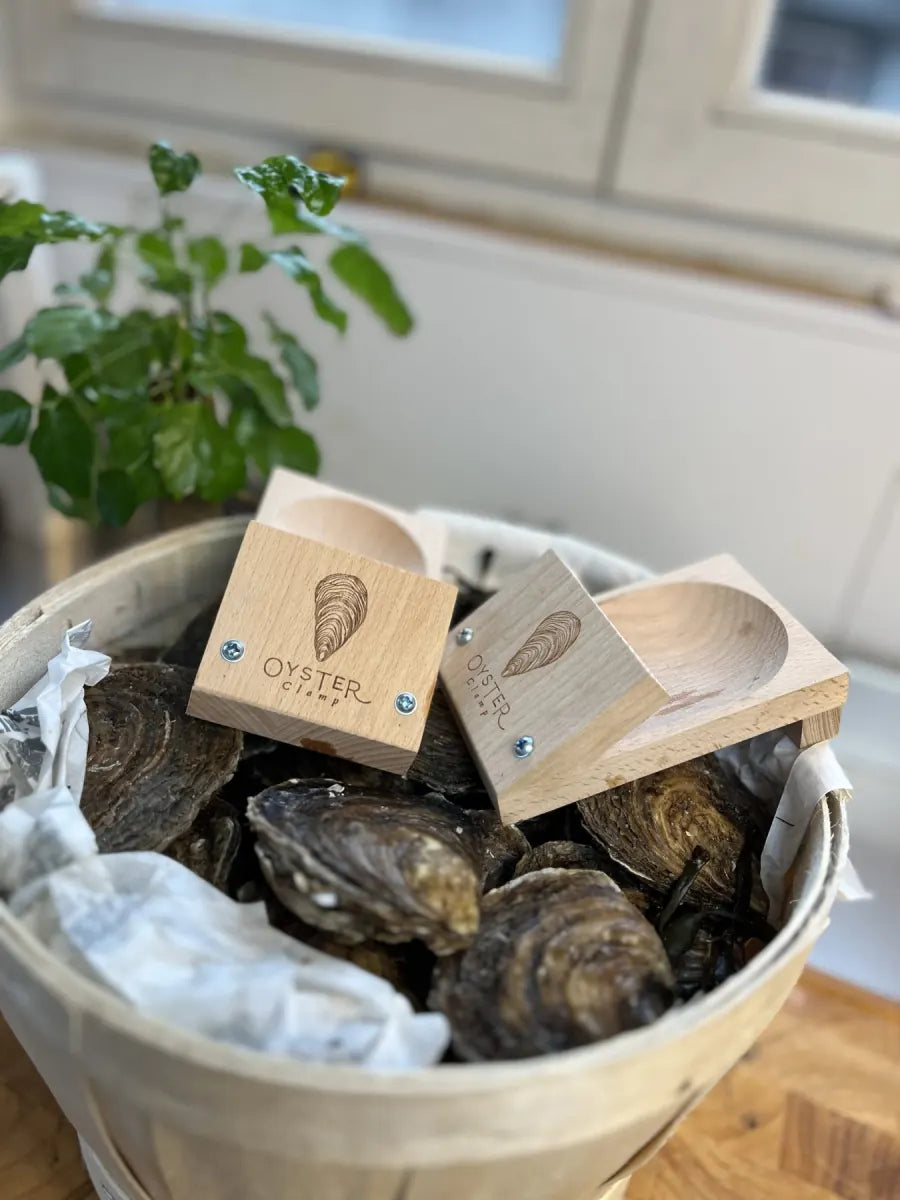
The OysterClamp 2.0 removes the single biggest hazard in home shucking: an unsecured oyster. The clamp holds the shell firmly in place, so your hand never needs to be anywhere near the blade path. Chef Henk spent 20 years in Michelin-starred kitchens watching professional shuckers work, and the core insight he built into this tool is that speed and safety both come from stability, not from force.
The chef-designed oyster shucking clamp uses a 25-degree lock design that holds oysters securely without crushing the shell or spilling the brine. You position the oyster, lock it in, and then guide the knife through the hinge with controlled pressure rather than brute force. The result is a clean pop at the adductor muscle every time, with the shell staying put and your fingers staying safe.
It fits most oyster sizes and varieties, from small Kumamotos to larger flat oysters, so you're not buying a tool that only works on one type. And because it's made from AA-grade hardwood and stainless steel, it's built to last, backed by a lifetime warranty that reflects exactly how confident Chef Henk is in the design.
How Forceware knives compare in a real home setting
Forceware produces knives built for experienced shuckers. Their Pro Shucker has a sharp, well-balanced blade and solid construction. In professional hands, it's a capable tool. The problem is that its design assumes you already know how to hold an oyster safely, how to find the hinge, and how to angle the blade to cut the adductor muscle without shattering the shell.
For a beginner, every one of those steps is a potential injury point. Without a clamp mechanism, the oyster moves. When the oyster moves, the knife follows unpredictably. That's not a criticism of Forceware's craftsmanship; it's a fundamental limitation of the knife-only format for anyone without professional training.
Here's how the two approaches break down on the things that matter most to a home cook:
- Grip security: OysterClamp 2.0 locks the shell in place with a 25-degree clamp. Forceware knives rely entirely on your hand pressure against a wet shell.
- Injury risk: With the clamp, your hand is never in the blade path. With a knife alone, a single slip puts fingers directly at risk.
- Learning curve: Chef Henk's tool requires no prior shucking skill. Forceware's approach requires practice before you can shuck safely at speed.
- Consistency: The clamp delivers the same result on oyster one and oyster twenty. Knife technique degrades as your hand tires.
- Brine preservation: Because the clamp holds the shell level and steady, you're far less likely to tip and lose the natural liquor that makes a freshly shucked oyster taste the way it does.
If you're weighing your options more broadly, our full breakdown of clamp versus knife shucking for beginners goes deeper into the mechanics of each approach.
What professional shucking speed actually looks like
Home cooks often ask how restaurants open oysters so fast. The answer isn't that their knives are sharper. It's that professional shuckers have built up hundreds of hours of repetition, and they work with stable setups that hold the oyster in position while they work.
The OysterClamp 2.0 replicates that stability for home use. Chef Henk's design insight was that the clamp does the job a professional's grip and technique normally do, which means a beginner can achieve professional-level speed and consistency from the first oyster. You're not practicing until you get it right. You're getting it right immediately because the tool handles the hard part.
This matters most when you're hosting. If you're serving oysters on the half shell at a dinner party, you need to open a dozen or more in a reasonable window. Fumbling with a knife for three minutes per oyster isn't realistic. With the clamp design, even a first-timer can work through a tray of oysters without panic, without injuries, and without losing the brine that makes each one worth eating.
For anyone thinking about how to build an impressive oyster spread for guests, the OysterClamp blog covers everything from sourcing to serving.
Is the OysterClamp 2.0 worth it compared to just buying a knife?
A common objection we hear: "Can't I just use a regular knife?" Technically, yes. You can also cut vegetables with a butter knife. The question is whether the result is safe, consistent, and repeatable.
A Forceware knife or similar tool costs less upfront, but it comes with a steep skill tax. You'll spend time practicing, you'll likely have at least one close call, and you'll probably lose a few oysters to shattered shells or spilled brine while you figure out the technique. The OysterClamp 2.0 is currently available at 50% off, bringing it to €25.95, and it comes with a lifetime warranty. Over any meaningful period of use, that value proposition is straightforward.
The comparison that actually matters isn't OysterClamp versus Forceware on price. It's OysterClamp versus the cost of restaurant oysters, an ER visit, or the experience of watching a dinner party stall because you can't get the shells open. Fresh oysters at home are genuinely achievable, and the tool you use determines whether that's a joyful experience or a stressful one.
If you're also considering how this tool compares to other popular options on the market, our 2026 comparison of top shucking tools for hosting covers Toadfish and Dexter-Russell side by side with OysterClamp.
Clamp-based shucking isn't a workaround for beginners; it's what professional design actually looks like when the goal is consistent, injury-free results in a home kitchen. Stop dreading the shuck and start actually enjoying fresh oysters at home, on your terms, without restaurant prices or professional training. Get the OysterClamp 2.0 at 50% off and open your first dozen tonight.
Frequently asked questions
What is the safest oyster shucking tool for beginners?
A clamp-based tool is the safest option for beginners because it holds the oyster securely in place, keeping your hand out of the blade path. The OysterClamp 2.0, designed by Michelin Star Chef Henk, uses a 25-degree lock mechanism that stabilizes the shell during shucking. This eliminates the primary cause of oyster shucking injuries, which is an unsecured shell slipping toward the knife hand. No prior shucking skill is required to use it safely and effectively.
Can I use a Forceware knife if I'm a complete beginner?
Forceware knives are well-made tools designed for experienced shuckers. For a complete beginner, the knife-only format presents real safety risks because it relies on your grip strength and technique to hold the oyster steady. Without a clamp mechanism, any slip sends the blade toward your hand. Most beginners who try knife-only shucking without prior practice experience at least one near-miss. A clamp-based tool removes that variable entirely and delivers consistent results from the first attempt.
Do oyster shucking clamps work for all oyster sizes?
Yes. The OysterClamp 2.0 is designed to fit most oyster sizes and varieties, from small Kumamotos to larger flat oysters. The clamp adjusts to hold the shell securely regardless of size, which means you can use it with whatever oysters you source locally without worrying about compatibility. This flexibility makes it practical for home cooks who buy different varieties depending on what's fresh and available.
How do restaurants open oysters so fast?
Professional shuckers work quickly because they have hundreds of hours of repetition and use stable setups that hold the oyster in position. The speed comes from stability, not from knife sharpness alone. The OysterClamp 2.0 replicates that stability for home use, allowing beginners to shuck at a practical pace from the very first session without needing to build up professional-level muscle memory over months of practice.
Is a clamp-style shucker worth buying if I only eat oysters occasionally?
Yes, for two reasons. First, the OysterClamp 2.0 comes with a lifetime warranty, so it's a one-time purchase that stays in your kitchen indefinitely. Second, the tool makes occasional shucking genuinely enjoyable rather than stressful, which means you'll actually use it. Home cooks who find knife shucking difficult tend to stop trying. A clamp tool lowers the barrier enough that fresh oysters at home become a realistic option rather than a special-occasion ordeal reserved for restaurants.
What gloves should I use when shucking oysters at home?
Cut-resistant gloves are worth having when using any oyster knife, including when working with a clamp-based tool. They add a layer of protection for the hand guiding the knife through the hinge. Look for gloves rated for cut resistance rather than standard kitchen gloves. That said, the OysterClamp 2.0's design significantly reduces the need for gloves by keeping the hand away from the blade path during the shuck, making it a safer default even for those who skip the gloves.