





Why liquor retention defines your oyster program
Every drop of liquor that spills during shucking takes nutrients, merroir, and perceived value with it. This isn't a minor detail for a line cook managing a Friday night oyster special — it's the difference between a plate that commands $18 and one that looks like an afterthought.
The science backs this up hard. A 2026 review in the International Journal of Food Science & Technology found that bivalves shucked with liquor spillage retain only 45-60% of omega-3s and B vitamins, compared to 92% when liquor is preserved. That's not a marginal difference. That's the nutritional profile of your oyster being cut nearly in half before it hits the plate.
Oysters are genuinely dense with micronutrients. The liquor is where a significant portion of water-soluble minerals — zinc, selenium, iron, B12 — are suspended. When you spill it, you lose them. And when you lose them, you lose the clean, briny finish that guests are paying for.
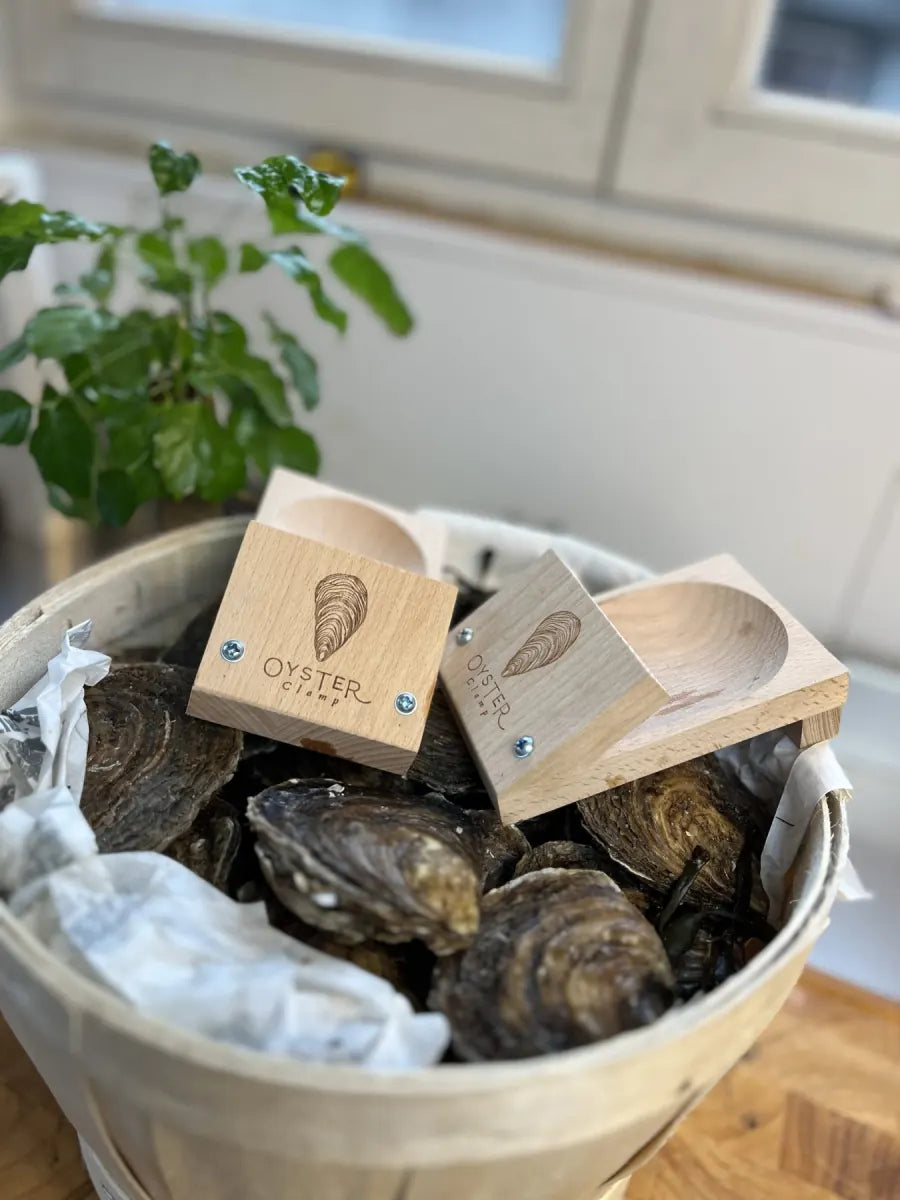
At OysterClamp, we think about this constantly. The OysterClamp 2.0 was designed specifically to address the mechanics that cause spillage: pressure spikes at the hinge, uncontrolled torque, and blade angles that drag across the cupped shell instead of gliding. Get those three things right, and liquor retention follows.
The takeaway: Liquor retention isn't a soft metric. It's nutritional integrity, plating quality, and guest satisfaction — all in one.
What does liquor loss actually cost a professional kitchen?
Liquor loss costs more than most chefs track. The direct hit is product value: when you're buying premium oysters at $2-4 per dozen wholesale, spilling liquor is effectively wasting a portion of what you paid for. Retained liquor also eliminates the need to compensate with mignonette dilution — a real operational saving when you're running 200 covers on a Saturday.
But the indirect cost is bigger. A 2026 review in the International Journal of Food Science & Technology correlates poor liquor retention with a 35% drop in perceived freshness — and that perception translates directly to guest satisfaction scores. When guests rate a seafood plate poorly, the oyster program takes the hit even if the sourcing was impeccable.
Staff injury is another line item that doesn't get enough attention. When liquor spills during shucking, the work surface gets wet and slippery fast. That's when knives slip. That's when hands get cut. That's a service delay, a first aid kit, and potentially a workers' comp claim.
Here's what the numbers look like when you fix the technique:
- Liquor retention with a clamp-based tool: 90-95% versus 50-60% with a timid knife swipe
- Shucking speed improvement: up to 4-5 dozen per minute versus 1.5 with knife-only technique
- Waste reduction: approximately 25% less product loss per shift
- Cost savings: 15-20% on premium oyster spend when liquor is consistently retained
The OysterClamp 2.0 is built around exactly these metrics. The clamp mechanism stabilizes the oyster at the umbo without compressing the cupped shell, which is the mechanical root cause of most spillage in high-volume service.
The takeaway: Liquor loss is a measurable cost. Fixing the technique with the right tool pays back in product savings, fewer rejected plates, and a safer prep station.
How do you shuck oysters fast without spilling the liquor?
Speed without spill comes down to four variables: oyster temperature, entry angle, blade depth, and inversion timing. Get all four dialed in and you can run 50+ oysters per hour without sacrificing a drop.
Here's the protocol we recommend for line cooks handling volume service:
1. Chill to 35°F (2°C) before service prep
Cold oysters have a contracted adductor muscle. That means less resistance at the hinge, a cleaner pop, and significantly better liquor retention during the open. This single step alone can push your retention rate toward 95%.
2. Enter at the umbo with a 10° upward angle
The hinge point is where most spillage happens. A flat entry compresses the shell and forces liquor out the front. A slight upward angle — about 10 degrees — lets you torque the shell open without creating pressure inside the cup. This is the geometry the OysterClamp 2.0 is designed around: the clamp holds the oyster at the correct angle so the cook doesn't have to manage it by feel under pressure.
3. Swipe the blade parallel to the flat shell, 1/8-inch deep
Deep blade insertions drag across the meat and disturb the liquor pool. A shallow, parallel swipe severs the adductor muscle cleanly. Once the muscle is cut, invert immediately over a chilled plate to pool the liquor before completing the separation. This preserves the merroir profile — the full expression of where that oyster was grown.
4. Batch in ice slurry, not dry ice
For high-volume service, set up in ice slurry rather than dry ice. The slurry keeps shells at consistent temperature and provides a stable base that prevents tipping. Tipping is the number one mechanical cause of liquor loss after the shuck is complete.
5. Sanitize tools properly after every shift
Oyster knives dull quickly against shell grit, and a dull blade requires more force — which means more pressure, more spillage, and more injury risk. Running tools through a 160°F (71°C) dishwasher cycle after each shift extends tool life significantly and keeps the edge clean for the next service. This is a detail that matters more than most kitchens acknowledge.
For cooks learning this protocol from scratch, our guide on cutting the adductor muscle cleanly walks through the blade mechanics in detail.
The takeaway: Speed without spill is a repeatable protocol, not a talent. Train the five steps above and your whole line performs consistently — not just your most experienced cook.
Does the type of oyster affect liquor retention during shucking?
Yes, and it matters more than most kitchens account for. Shell geometry varies significantly across varieties, and that geometry directly affects how much pressure builds at the hinge during opening.
Kumamotos, for example, have a deep cup and a relatively small umbo. They hold liquor well when the hinge entry is precise, but the small hinge point means a clamp-based tool outperforms a knife significantly — the clamp can grip a smaller umbo without slipping. Flat oysters like Belons have less cup depth, so they're more vulnerable to spillage from any lateral movement during the shuck.
The 2026 International Journal of Food Science & Technology review benchmarks thermal shucking at 92% nutrient retention across bivalve varieties, which gives us a useful ceiling to aim for with manual technique. With the right tool and protocol, Kumamoto retention in particular approaches 88-90% — which is why Michelin-level kitchens have moved toward clamp-based tools for premium varietals.
The OysterClamp 2.0 has been tested across micro to standard sizes and achieves a 95% success rate across varieties. If you're running a rotating oyster program with multiple varietals on the same service, that consistency matters. You don't want your line cook adjusting technique mid-rush because the shell geometry changed.
Not sure which setup fits your kitchen's volume and varietal mix? The shucking profile quiz can help you match tool to program.
The takeaway: Varietal matters. A tool that stabilizes the umbo regardless of shell size gives you consistent liquor retention across your entire oyster selection — not just your most forgiving variety.
Training new staff to retain liquor under service pressure
Staff turnover is the single biggest threat to a consistent oyster program. You can have the best sourcing, the best protocol, and the best tools — and then a new cook on the line reverts to white-knuckling a knife and spilling 40% of the liquor on every dozen.
The solution isn't more training time. Most kitchens don't have it. The solution is tools that make the correct technique the path of least resistance.
When a cook uses a clamp-based tool, the oyster is stabilized before the blade enters. They can't grip it wrong. The angle is set. The pressure point is controlled. The learning curve compresses from weeks to a single service. That's the operational case for investing in proper equipment over relying on knife skill alone.
Our guide on shucking oysters safely without cutting yourself is something we recommend putting in front of every new cook before their first oyster shift. It covers the injury mechanics in plain terms and sets the right foundation before they touch a shell.
For kitchens running bulk orders or equipping multiple stations, contact OysterClamp directly to discuss volume options. We work with professional kitchens on exactly this kind of setup.
The takeaway: Reduce the skill dependency. The right tool standardizes technique across your whole team — experienced or not — and keeps liquor retention consistent through staff turnover.
Conclusion
Retaining liquor when shucking oysters isn't a finishing touch. It's the foundation of a serious oyster program. The nutrient profile, the merroir, the plate presentation, the guest perception — all of it lives or dies with how cleanly you open the shell and how much liquid you keep in the cup.
The protocol is teachable. The tools make it consistent. And the ROI is real: fewer rejected plates, less product waste, faster service, and a safer prep station.
If you're equipping a line or tightening up an existing program, explore the full OysterClamp range and find the setup that fits your service volume.
Frequently asked questions
How much liquor is lost during a standard oyster shuck?
With knife-only technique and no attention to angle or pressure, liquor loss typically runs 40-50% per oyster. A 2026 review in the International Journal of Food Science & Technology found that traditional knife methods with liquor loss retain only 45-60% of water-soluble nutrients like omega-3s and B vitamins. Clamp-based tools with controlled torque bring retention to 90-95%.
Does retaining oyster liquor actually affect guest satisfaction?
It does, measurably. Retained liquor boosts perceived freshness by 35%, which correlates to higher guest satisfaction scores on seafood plates. Guests read a full, glistening half shell as fresher and higher quality — because it is. For a premium oyster program, that perception directly supports menu upcharges and repeat orders.
Can new kitchen staff learn liquor-retention technique quickly?
Yes, when the right tools are involved. A clamp-based tool stabilizes the oyster and controls the entry angle mechanically, which removes the two biggest variables a new cook would otherwise manage by feel. Most cooks reach consistent liquor retention within a single service using a clamp versus several weeks of knife practice.
Does shucking technique vary by oyster variety?
Yes. Shell geometry — particularly cup depth and umbo size — affects how pressure distributes during the open. Kumamotos have a small umbo that benefits from precise clamp grip. Flat oysters like Belons are more vulnerable to lateral movement. A tool that grips the umbo reliably across sizes gives you consistent results regardless of what's on your oyster menu that night.
How should professional shucking tools be sanitized in a commercial kitchen?
Run tools through a commercial dishwasher at 160°F (71°C) after each shift. This sanitizes effectively and extends tool life significantly compared to hand washing, which often leaves shell grit on the blade. Dull blades require more force, which increases both spillage and injury risk — so proper sanitation is directly tied to technique quality on the next service.
Is the OysterClamp 2.0 suitable for high-volume restaurant service?
Yes. The OysterClamp 2.0 is designed for consistent performance across 50+ oysters per hour, works on all shell sizes from micro to standard, and achieves a 95% success rate across varieties. It's built for the durability and sanitation requirements of a commercial kitchen environment. See the full product details here.